 House Clearance Soho: Recycling and Sustainability Commitment
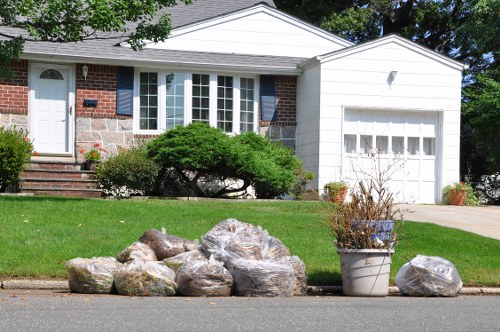
House Clearance Soho is committed to delivering an eco-friendly waste disposal area approach across the West End. Our aim is to combine practical clearance services with measurable environmental action. As a leading provider of Soho house clearance services we focus on minimising landfill, maximising reuse, and supporting borough-level recycling initiatives. This page outlines our recycling percentage target, local transfer stations we use, our charity partnerships, and the low-carbon transport we deploy to keep Soho and surrounding boroughs greener.
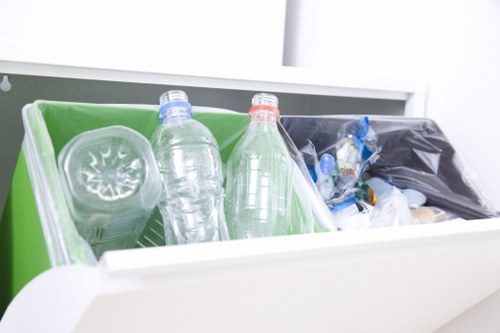
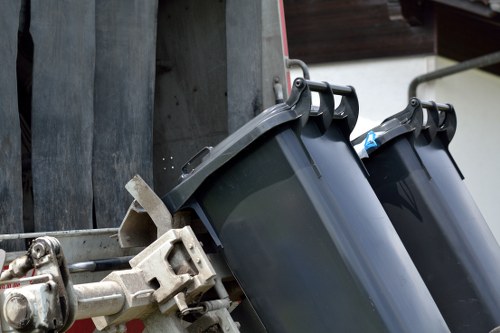 Why sustainable house clearance in Soho matters: narrow streets, dense residential blocks, and a high volume of bulky waste make careful handling essential. We operate with local policies in mind: many local boroughs such as the City of Westminster and the London Borough of Camden expect separated streams (food waste, mixed recycling, glass and textiles) and have strong reuse networks. Our procedures are aligned with those approaches to maximise diversion from landfill.
Our Recycling Percentage Target and How We’ll Achieve It
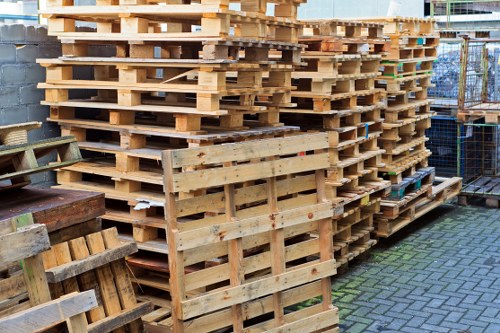 Recycling percentage target: we aim for a minimum of 75% recycling and reuse across all house clearance projects by 2028, with an immediate operational target of 60% within the next 12 months. That target covers materials diverted to repair, resale, donation, and specialised recycling streams (e-waste, metals, cardboard, textiles and green waste). To reach that goal we use waste audits, on-site segregation, and direct delivery to facilities that accept high-quality reuseables.
Operational tactics include route-level sorting at collection, prioritising salvageable furniture, and using trained crews to separate items for different destinations. Where possible we avoid compaction that damages items destined for reuse. These practices are part of our broader Soho waste clearance strategy and reflect the expectations of local waste-handling schemes.
Local Transfer Stations and Borough Collaboration
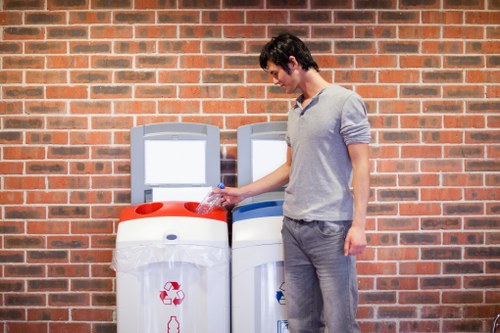 We coordinate with multiple local transfer stations and consolidation points serving Westminster, Camden and neighbouring boroughs. By delivering sorted loads to approved transfer stations and materials recovery facilities (MRFs), we ensure recyclable streams like glass, paper, and metals are processed correctly. Our partnerships extend to community reuse centres where salvageable items are inspected, cleaned and made available for resale or donation.
City and borough authorities often run different collection regimes — some use separate food waste bins, others favour co-mingled dry recycling with separate glass collection. Our teams are trained to recognise and adapt to each borough's approach to waste separation, which reduces contamination rates and improves overall recycling outcomes for the area.
 Charity partnerships are central to our reuse-first philosophy. We work with a range of reputable organisations — from national charities to local community reuse projects — to direct good-condition furniture, white goods and textiles into second-life channels. Typical partners include local shelters and social enterprises that accept items for refurbishment, social resale or direct redistribution to households in need. These relationships mean fewer items are processed as waste and more are given a useful second life.
What we divert and how:
- Furniture and fittings: inspected, repaired and offered to charity shops or social enterprises.
- Electricals and e-waste: separated and taken to licensed WEEE processors.
- Textiles and soft furnishings: segregated for textile recyclers or charity reuse.
- Metals, glass and cardboard: routed to MRFs and local transfer stations per borough collection rules.
We also invest in small but effective measures: specialist crates to protect salvaged items, clear labelling for segregated loads, and ongoing crew training on reuse assessment. These steps help reduce contamination and increase the volume of items suitable for donation or recycling. In practical terms, that means fewer journeys to landfill and more materials entering circular economy pathways.
Low-carbon vans and fleet management: our fleet includes low-emission vehicles — a mix of electric vans and Euro 6 hybrid models — used across Soho and surrounding areas. Route optimisation software reduces mileage and idle time so collections are both faster and cleaner. By lowering emissions during transport we support an overall reduction in the carbon footprint of house clearance activities in central London.
We monitor fleet emissions and constantly review vehicle replacements to ensure our logistics remain aligned with the best low-carbon options available. Coupled with consolidated deliveries to transfer stations and charity partners, this reduces the environmental impact of every clearance job.
Performance tracking and transparency: progress against our recycling target is reported internally and used to improve practices. We keep records of tonnages sent for reuse, recycling and energy recovery, and we work with borough partners and transfer station operators to validate outcomes. This evidence-led approach helps refine sorting protocols and strengthens our charity donation pathways.
How this benefits Soho residents and businesses: better waste separation, stronger charity links, and low-carbon transport mean house clearance becomes part of a sustainable local circular economy. For residents in Soho seeking an eco-conscious option, our services support borough recycling policies and increase the likelihood that items will be reused locally rather than lost to landfill.
In summary, Soho waste clearance with an emphasis on sustainability is achievable through clear targets, responsible logistics, and close work with transfer stations and charities. Our aim is to be the benchmark for eco-friendly house clearance Soho — practical, measurable and rooted in local partnership.